Design notes
Old Bones, New Systems: What Adaptive Reuse Actually Asks of a Barbadian Building
Jahmal Springer
Lead Designer, Blue Island Projects
28 April 2026 · 4 min read
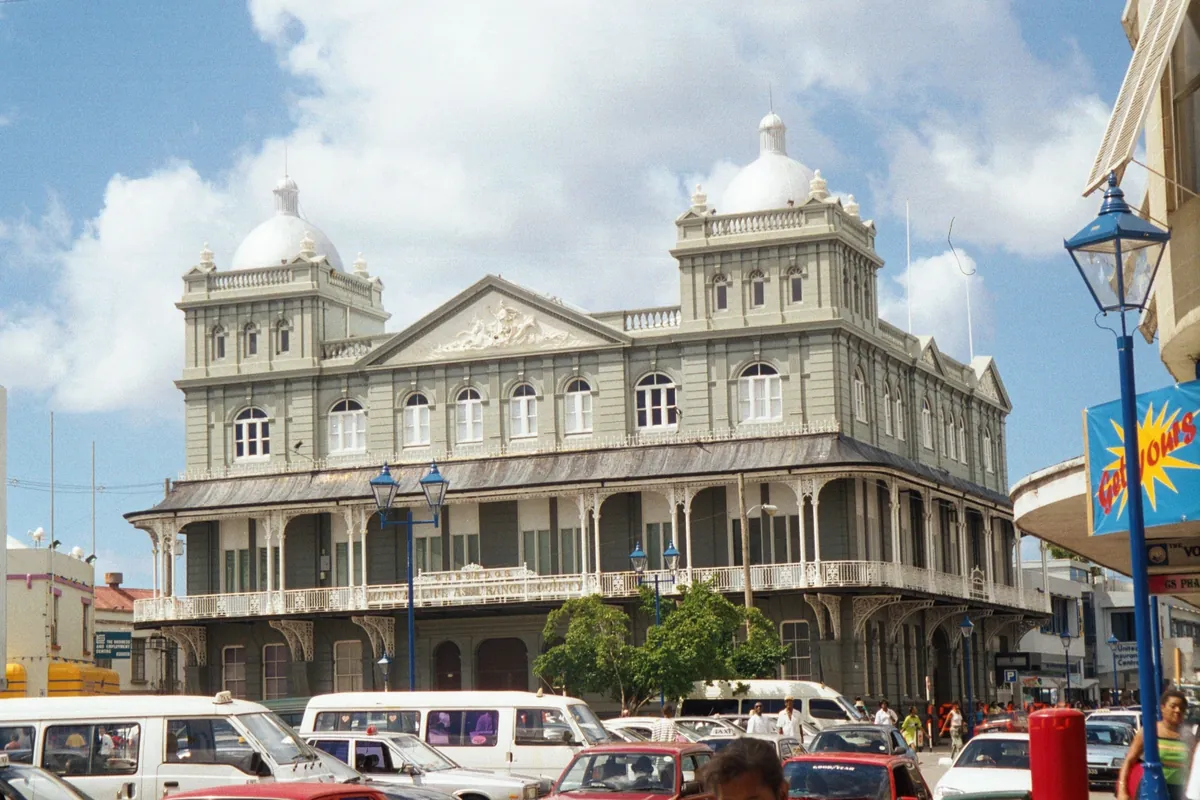
The Barbados Mutual building in Bridgetown. Buildings like this survive not because they are protected on paper, but because someone keeps using them and maintaining the roof.
Photograph: CaribDigita, public domain, via Wikimedia Commons
Restoration, rehabilitation and adaptive reuse are not the same thing, and confusing them is how good Barbadian buildings get ruined by well-intentioned work. Here's how I decide which one a building actually needs.
Start with local conditions
Every few months I am asked whether Barbadian architecture is modernising or losing its identity to generic international design.
The more useful distinction is between buildings that respond to this island and those drawn elsewhere and dropped onto a Barbadian lot. Sun angles, trade winds, salt exposure, rainfall, local labour and material supply reveal the difference.
A house can be aggressively contemporary and deeply Barbadian. A house can have gable ends, fretwork and jalousie-shaped louvres and be a badly performing import. The style tells you almost nothing.
“Vernacular is not a style. It is a set of answers to local conditions — and the conditions have not gone anywhere.”
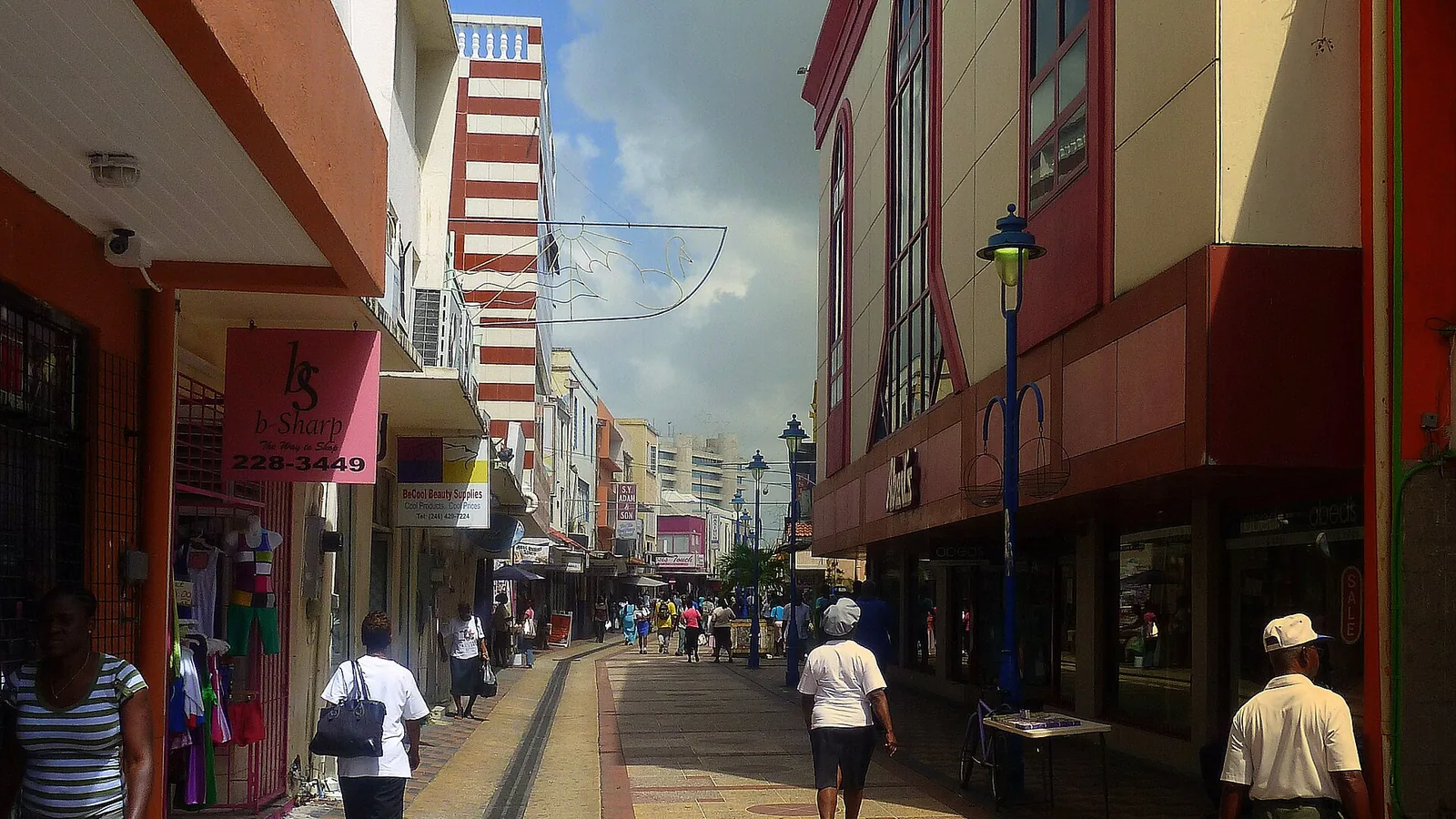
Speightstown, St Peter. Shallow-plan buildings, continuous street frontage and shaded first-floor overhangs — an urban pattern that produces shade at pavement level, which is the single most valuable amenity in a Barbadian town centre.
What we actually have a lot of: good bones
Barbados holds an unusually deep stock of solid masonry buildings — coral stone and rendered block, thick walls, tall openings, generous ceiling heights. Historic Bridgetown and its Garrison was inscribed by UNESCO as a World Heritage property in 2011, but the stock extends far beyond the inscribed area, into Speightstown, Holetown, parish villages and countless commercial buildings from the first half of the twentieth century.
Structurally, most of these buildings are not the problem. What ages badly is everything else: roofs, timber floors, windows, and above all services. Electrical installations reaching the end of their life, no data infrastructure, plumbing chased into walls that should never have been cut, and air-conditioning added by drilling through whatever was in the way.
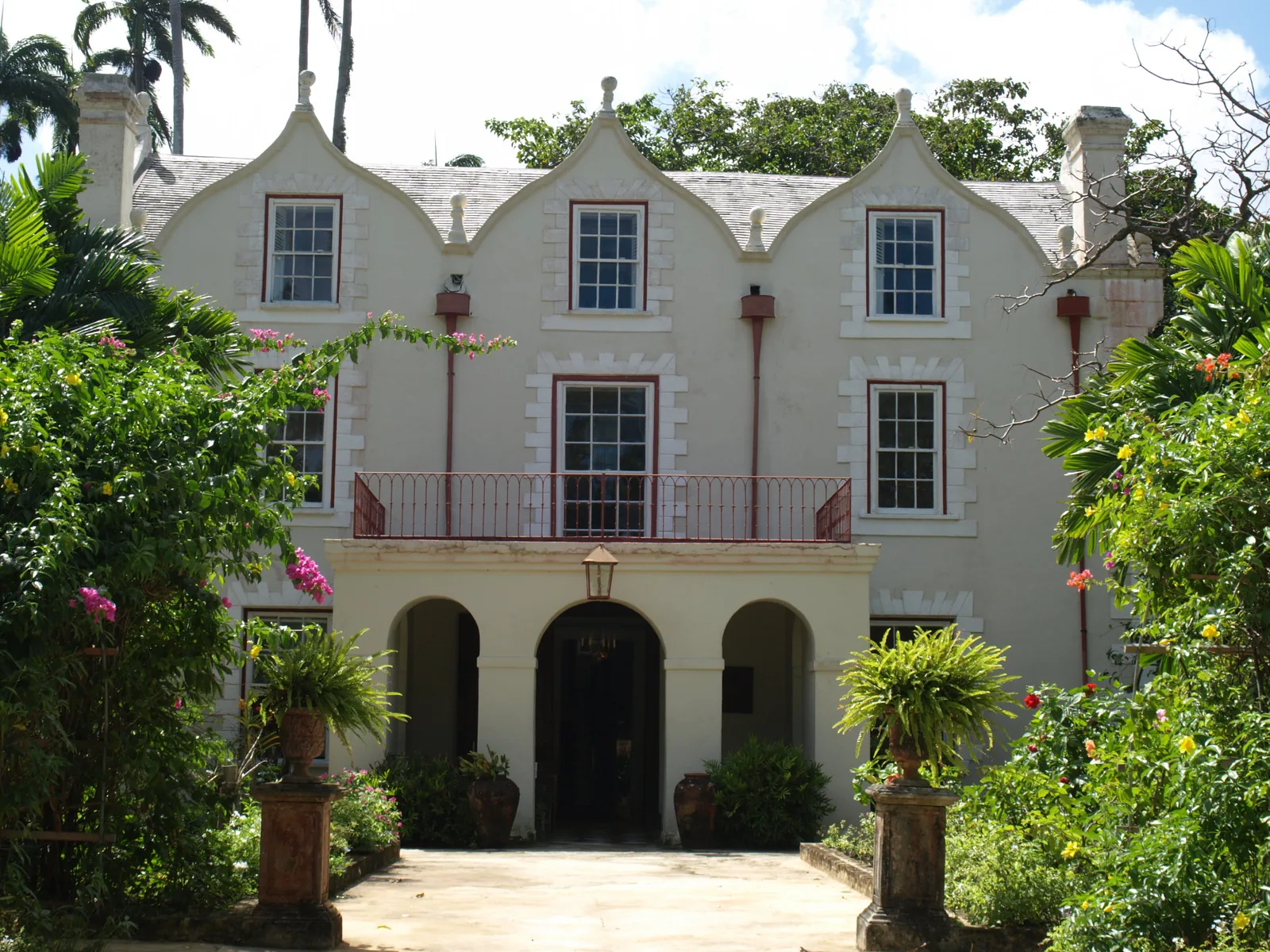
The Barbados Mutual Life Assurance Society building on Broad Street, Bridgetown. Deep arcaded openings, heavy walls and tall floor-to-ceiling heights give a building like this real adaptive capacity — it can accept new uses that a low-ceilinged modern shell cannot.
Photograph: CaribDigita, public domain, via Wikimedia Commons
Preservation, restoration, rehabilitation, adaptive reuse — the words matter
These terms get used interchangeably in conversation and they mean genuinely different things in practice, with different costs and different approvals.
- Preservation: stabilise and maintain what exists, with minimal intervention.
- Restoration: return the building to a documented earlier state, removing later additions.
- Rehabilitation: repair the fabric and upgrade it for continued contemporary use.
- Adaptive reuse: keep the fabric and give the building a new function entirely.
- Reconstruction: rebuild what is lost, on evidence rather than on invention.
Most viable Barbadian work sits in the last two categories, and I think that is the honest position. An empty heritage building is not being preserved; it is being slowly lost with better manners. The roof leaks, the timber goes, the walls take water, and the cost of intervention climbs every year.
The failure mode is almost always water and neglect
In Barbados, historic masonry rarely fails because of its age. It fails because a roof or gutter let water into the wall and nobody occupied the building long enough to notice.
Cement renders and impermeable modern paints make this worse on older coral stone walls: they trap moisture inside the masonry instead of letting the wall dry out, which is why a well-meant repair sometimes accelerates decay.
In my view, roof, rainwater goods and breathable finishes are the first three items on any Barbadian conservation budget — before anything visible.
A Barbadian example worth studying
The Nidhe Israel Synagogue in Bridgetown is the case I return to with clients who think heritage work is sentimental. The building was in serious decline in the twentieth century and came back into active use through a restoration effort, with the adjoining museum and the excavated mikvah now forming part of the site's public offer inside the UNESCO-inscribed area.
What makes it instructive is not the craftsmanship, impressive as it is. It is the fact that the building has a function, a caretaker, an income stream and visitors. That combination is what keeps a roof maintained for the next fifty years.
Nidhe Israel Synagogue, Bridgetown, restored and back in use with an adjoining museum. Occupancy and a maintenance budget protect historic fabric more reliably than any designation does.
“Regular use, income and maintenance give a heritage building its best chance of survival.”
New systems into old bones: how I actually detail it
The technical heart of adaptive reuse in this climate is unglamorous: how you get modern services through a historic building without destroying the thing you are trying to keep.
Servicing a historic Barbadian building
- 01
Survey first
Measure and record the existing fabric before design decisions — including moisture, timber condition and previous alterations.
- 02
Roof and rainwater
Make the building watertight before anything else. Every later decision depends on a dry wall.
- 03
Service spine
Concentrate new plumbing, power and data in one reversible route — a new lined core or a service wall — rather than chasing every wall.
- 04
Reversible fixings
New work fixed into mortar joints and later fabric where possible, so a future generation can undo it.
- 05
Passive before plant
Reopen blocked openings, reinstate shutters and cross ventilation, then size cooling to what remains.
- 06
Discreet plant
Condensers, tanks and inverters located out of the primary elevations and detailed for salt exposure.
When I design an intervention into an older Barbadian building, the test I apply is whether it could be removed in fifty years without taking original fabric with it. That is a conservation principle, but it is also plain risk management: today's ideal system is tomorrow's obsolete equipment.
Where new build fits into this
None of this argues against new construction. Barbados needs housing, and concrete block, cast slabs and local labour will keep defining what is buildable and financeable here for the foreseeable future.
What I would push for in new work is that it learns from the adaptive-reuse experience: generous ceiling heights, deep openings that shade themselves, plan depths that allow cross ventilation, and services routed so they can be replaced without demolition. Those are the features that make an old Barbadian building worth saving. They will be the features that make a 2026 building worth saving in 2090.
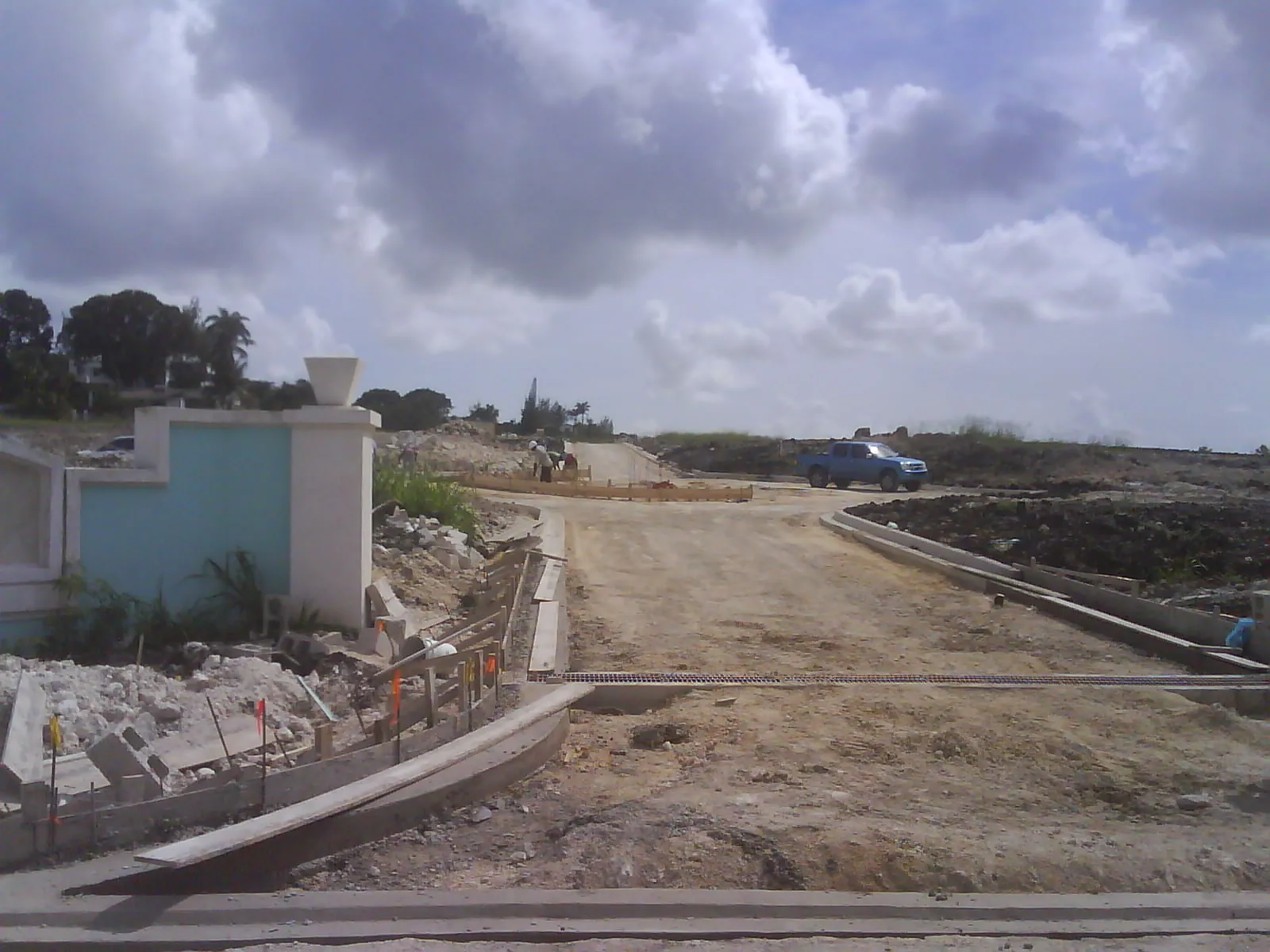
Contemporary block construction at South View, Christ Church. The materials have changed; the questions — ceiling height, opening depth, plan depth, where the services run — are the same ones the older stock answered well.
Coastal development on the west coast. Where openings are small and unshaded and plan depths block airflow, the building commits its occupants to permanent mechanical cooling — a design decision, not a climate inevitability.
What this means if you own an older Barbadian building
Before you renovate an older building here
- 01Fix the roof, gutters and downpipes first — then reassess everything else.
- 02Have the fabric surveyed, including moisture and timber condition, before you commit to a design.
- 03Check whether the property sits inside the UNESCO-inscribed area or is otherwise designated, and confirm approvals early.
- 04Avoid sealing older masonry with impermeable cement render or plastic paint; let the wall breathe.
- 05Reopen and repair original openings and shutters before adding mechanical cooling.
- 06Group new services into one reversible route rather than chasing every wall.
- 07Keep ceiling heights and tall openings — they are the building's best passive asset.
- 08Plan the maintenance regime and budget on day one, not after handover.
THE BLUE ISLAND TAKE
Barbadian architecture is not at risk of being overwhelmed by modern design. It is at risk of being overwhelmed by indifferent design — buildings that could stand anywhere, cooled entirely by machinery, with no relationship to sun, wind or street.
The tradition worth protecting was never a roofline or a fretwork pattern. It was a habit of attention: building for this climate, with what is available, in a way that can be repaired. Old fabric can carry modern systems while retaining the habits of attention that made the building Barbadian.
Related reading
- Rebuilding Bridgetown: What Restoration Really Asks of an Architect
Why occupancy, not designation, is what saves the historic city.
- Coral Stone and the Original Air Conditioning
The material behaviour behind the island's older masonry buildings.
- Bridgetown After the Water
What flood risk means for rehabilitating buildings around the Careenage.
Every generation here has built with what it had, for the climate it faced.
The buildings we keep are the ones that stayed useful.
Keep the bones, replace the systems, and let the building keep working.
Jahmal Springer
Lead Designer, Blue Island Projects
Sources & further reading
- UNESCO — Historic Bridgetown and its Garrison, World Heritage inscription
- Barbados National Trust — heritage properties and conservation work
- Nidhe Israel Synagogue and Museum — Barbados National Trust
- Barbados Museum & Historical Society — collections and research
- Town and Country Development Planning Office — planning applications and policy
- Building Standards Authority — Ministry of Transport, Works and Water Resources
- ICOMOS — international conservation principles