Design notes
Rebuilding Bridgetown: What Restoration Really Asks of an Architect
Jahmal Springer
Managing Director & Lead Designer, Blue Island Projects
11 August 2026 · 6 min read
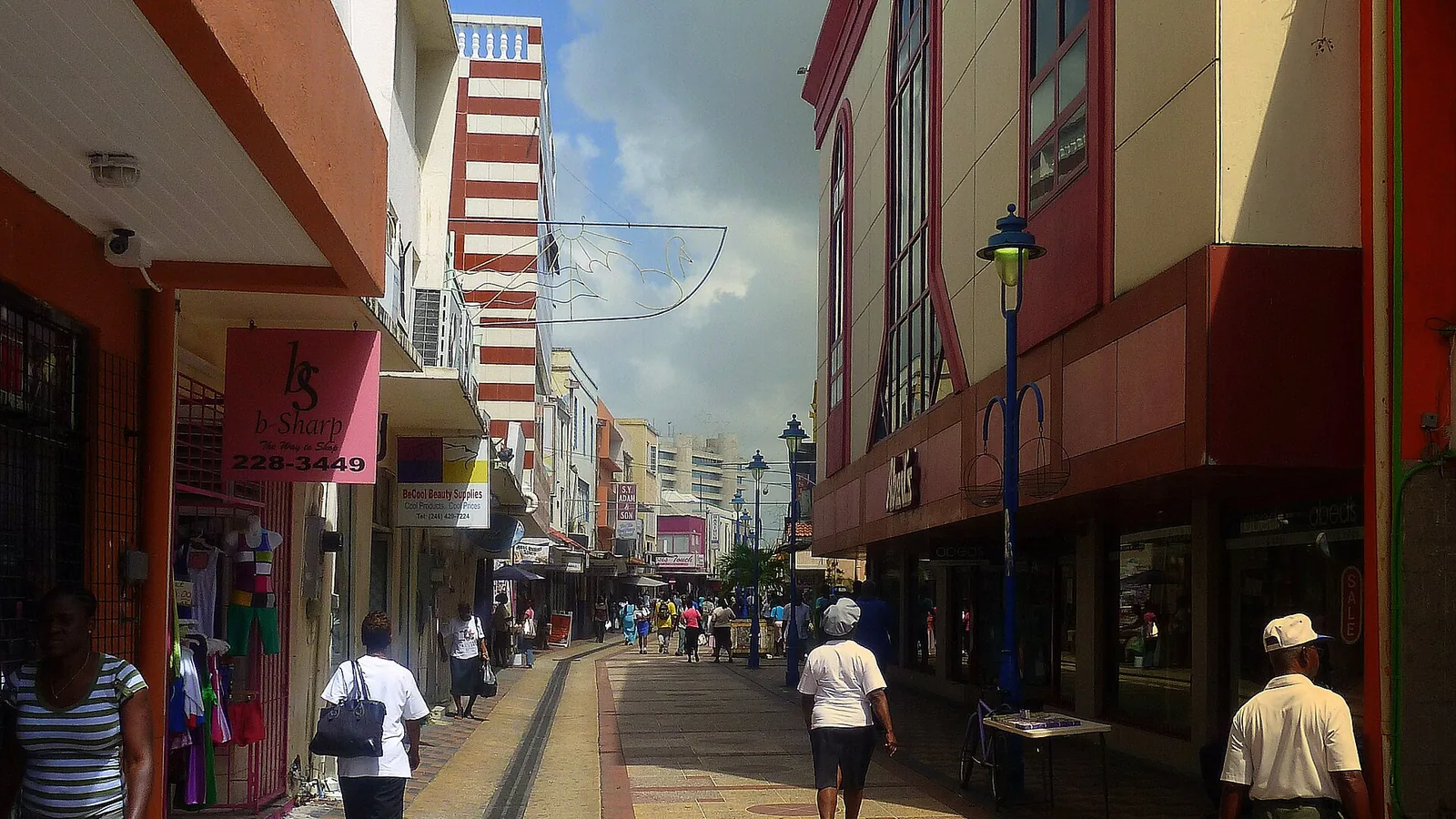
Bridgetown’s historic buildings need repair, viable uses and regular occupation.
There is something uncomfortable about walking through Bridgetown after the shops close.
The streets, coral-stone walls, timber floors, old shopfronts, Georgian proportions and narrow lanes remain. Too many of the rooms behind those facades, however, are empty.
Vacancy is the problem we need to address.
We often speak about heritage as though the greatest threat to Bridgetown is change. I believe the greater threat is abandonment.
A building does not survive simply because we declare it historic. It survives because someone maintains the roof. Someone repairs the windows. Someone occupies the rooms. Someone pays the electricity bill, fixes the plumbing and finds a reason to keep the doors open.
“Heritage survives through use.”
The city is the museum
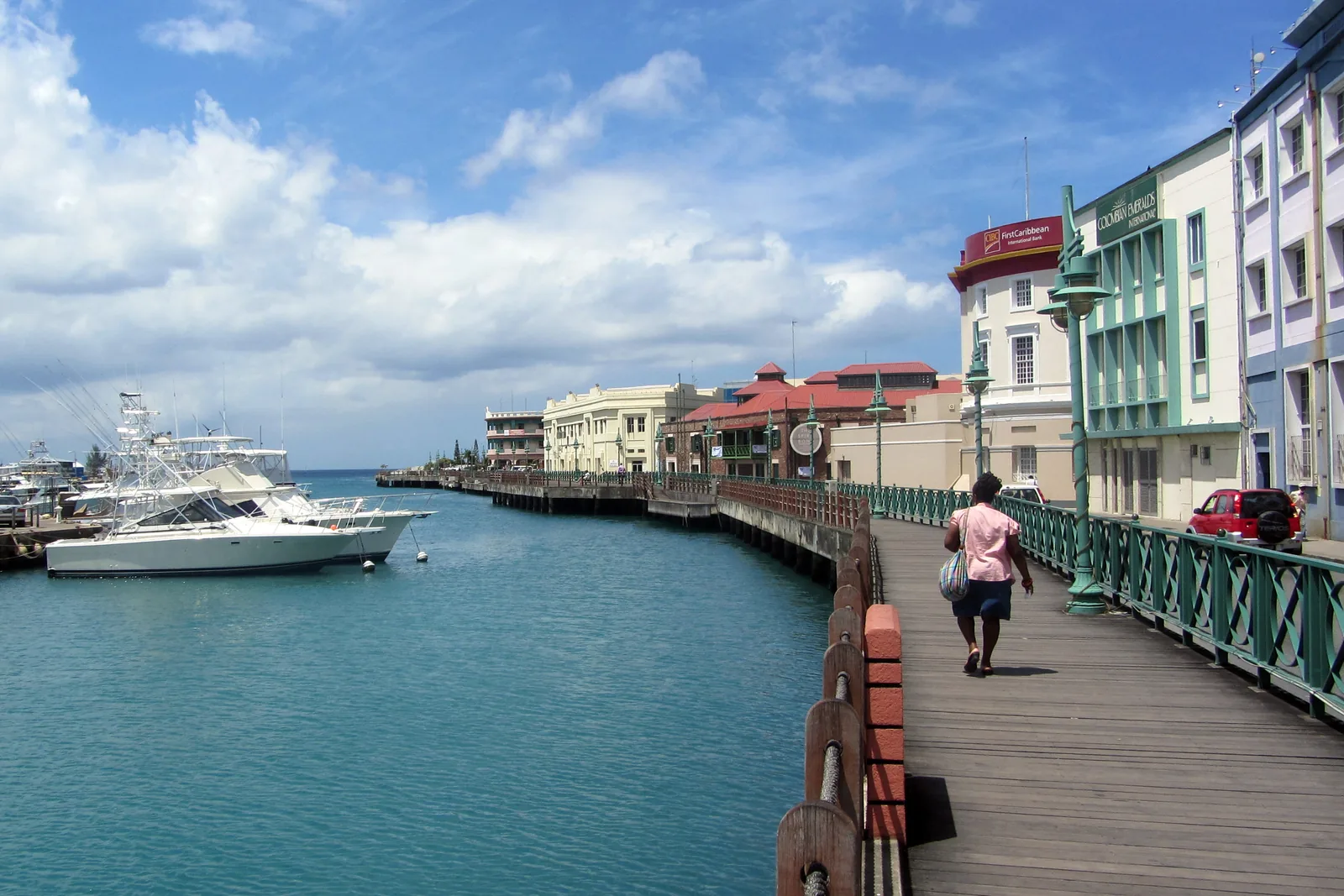
Historic Bridgetown and its Garrison was inscribed on the UNESCO World Heritage List in 2011 because of the exceptional character of its historic urban fabric — its serpentine streets, historic masonry architecture, warehouses, dock facilities, and the relationship between the city, the port and the Garrison.
UNESCO also recognises that Bridgetown remains a contemporary cosmopolitan city rather than a museum frozen in time. That distinction matters, because we have to decide whether we want to preserve buildings or preserve a living city.
Source: UNESCO World Heritage Centre
Neglect does more damage than age
Some of Bridgetown's historic buildings have already survived hurricanes, decades of commercial use and generations of ownership. What they often cannot survive is years of doing nothing.
- A leaking roof becomes rotten timber.
- Rotten timber becomes structural damage.
- Structural damage makes restoration more expensive.
- The building becomes financially unattractive.
- The upper floors remain vacant.
Eventually someone says: “It is too far gone.” And another piece of Bridgetown disappears.
This is why restoration cannot begin with aesthetics. It begins with water, structure, materials and use.
- Repair what is sound.
- Replace what genuinely needs replacing.
- Remove inappropriate materials where they are damaging the building.
- And, most importantly, find a viable use for the space.
Stop trying to make old buildings pretend they are new.
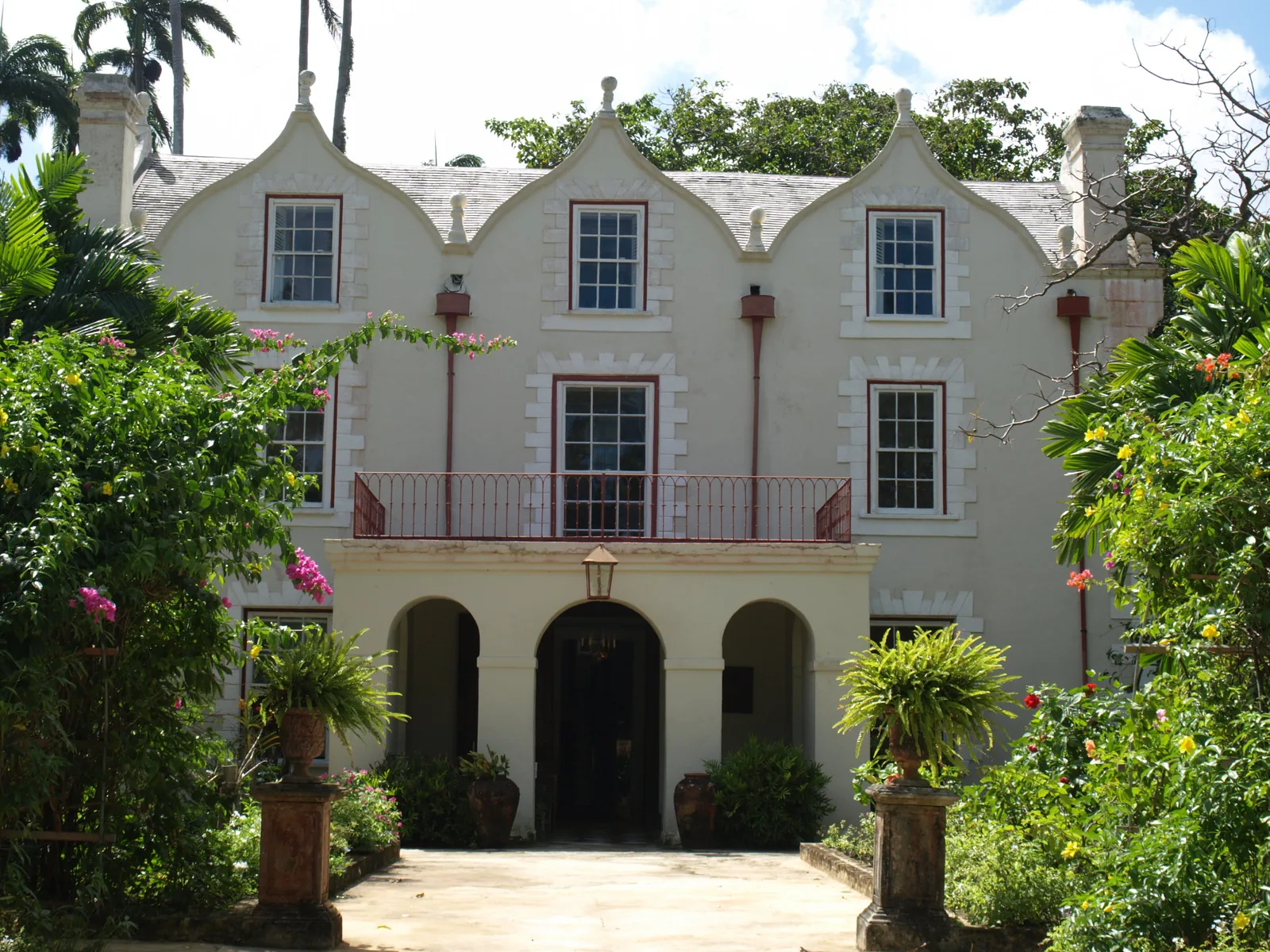
One of the biggest mistakes we can make in heritage architecture is confusing restoration with imitation. A nineteenth-century shop-and-store building was not designed for a modern open-plan office. It was not designed for today's electrical loads, air-conditioning systems, fire requirements, accessibility standards, lifts, data infrastructure or contemporary bathrooms.
A workable response is adaptive reuse: introduce modern requirements with care, without forcing them through old fabric or reproducing a Victorian building in concrete.
- Keep the street elevation.
- Respect the roof.
- Retain the primary structure.
- Repair the coral stone.
- Protect the historic proportions.
Then introduce the new things the building genuinely needs: a stair, a lift, a service riser, mechanical systems, fire protection, modern bathrooms, new electrical and data infrastructure. Where possible, put those interventions toward the rear or into carefully considered contemporary additions. And let the new work look new.
“Good restoration lets original fabric and new work be read clearly.”
The conversation between them is where the architecture becomes interesting.
Coral stone behaves differently from concrete
This matters particularly in Bridgetown. Historic coral-stone construction behaves differently from modern concrete construction. It was part of a building system designed to deal with Barbados' tropical environment.
When we cover historic masonry with hard, impermeable materials without understanding how moisture moves through the wall, we can create problems rather than solve them. The old building begins to fight the new material.
- Moisture gets trapped.
- Timber deteriorates.
- Salt crystallisation damages masonry.
- The wall is blamed.
Sometimes the intervention causes the problem. Before replacing anything, we need to understand why the original fabric survived.
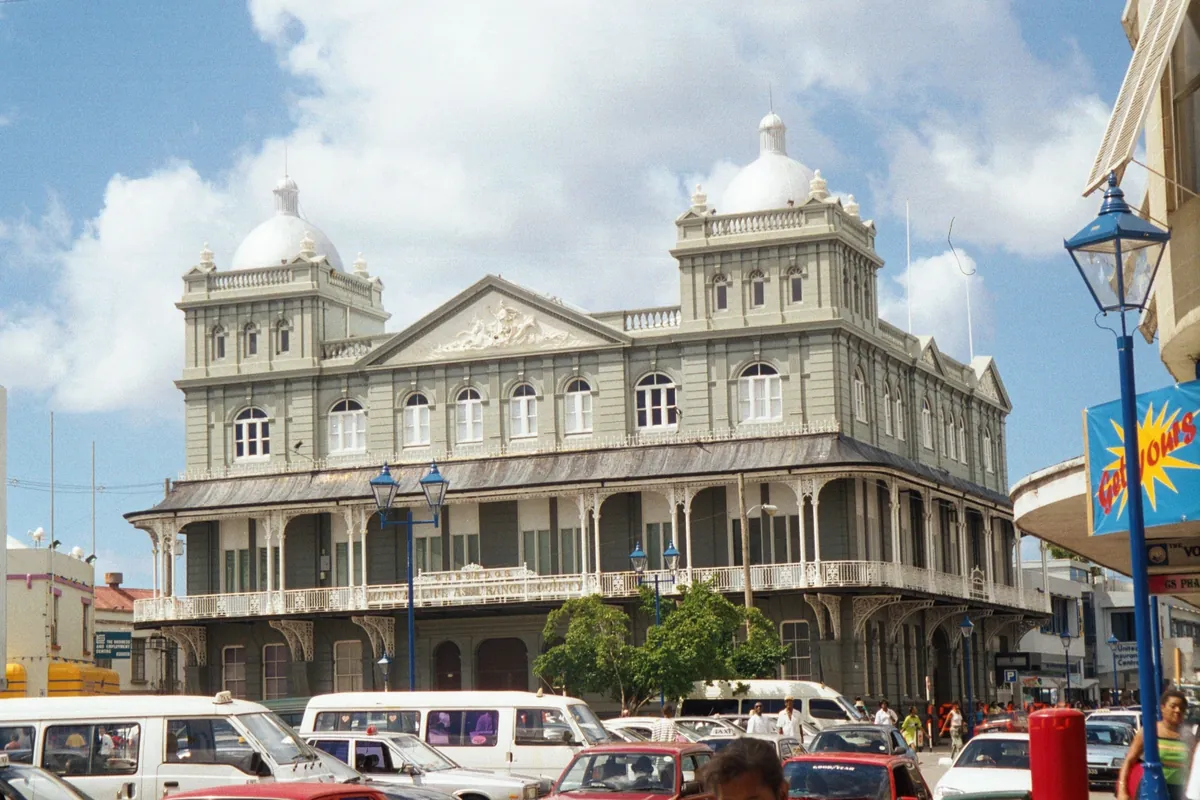
Historic coral-stone construction in Bridgetown — the Parliament Buildings on National Heroes Square. The material itself is part of the city's architectural identity.
And then there is the carbon argument.
There is another reason we should be taking restoration more seriously. The greenest building is not automatically the newest building. When we demolish an existing structure, we discard the embodied energy and material already invested in its walls, floors and roof. Then we manufacture new materials, transport them, construct a replacement and dispose of the old building.
A historic masonry shell already standing in Bridgetown has something a new building cannot buy back:
Time
Thermal mass, proportion and cross-ventilation, already proven on this island.
Its thick walls provide thermal mass. Its windows and proportions often reflect an understanding of cross-ventilation. Its streets and buildings were shaped around the Caribbean climate long before air-conditioning became the default solution. Restoration, properly executed, is both a heritage strategy and a sustainability strategy.
Bridgetown is already telling us what it needs.
The issue now extends beyond architecture. In July 2026, Barbados TODAY reported on Government plans to target derelict properties and revive Bridgetown. The Prime Minister’s message was direct: a capital city must “live” and “breathe” and cannot be only a place where people go to work.
That is exactly the conversation we should be having. Not “how do we make Bridgetown look historic?” but “how do we make Bridgetown live again?”
Source: Barbados TODAY · July 2026
Real Barbados case study: the Pierhead project
The current Pierhead development shows how heritage and development can reinforce each other. The approximately $200 million project combines new residential, retail, food and beverage and leisure uses with the restoration of the historic Blackwood Screw Dock. Phase One is planned to include 39 apartments while retaining public access to the waterfront.
The approximately $200 million investment matters, but so does the arrangement: historic fabric sits within an active residential and commercial development. At its best, the project can protect heritage while giving the waterfront a viable use.
Source: Barbados TODAY · 10 June 2026
Before → Now → Proposed
BEFORE
BEFORE — Blackwood Screw Dock. Historic photograph showing the dock in working use, long before the current redevelopment.
NOW
NOW — Pierhead construction. Current work at the Blackwood Screw Dock and the surrounding waterfront site.
PROPOSED
PROPOSED — The Pierhead. Developer-provided visualization of the proposed completed development. This is a rendering, not a photograph.
Editorial note: The Pierhead Project is still under development. “Proposed” refers to developer-provided CGI imagery and should not be interpreted as a photograph of the completed project.
Repairing what remains
Earlier reporting on the project noted that the development team intended to salvage coral stone, brick, timber and other elements of heritage value rather than simply discard them during construction. That is the distinction between restoration and reconstruction.
A structurally sound coral-stone wall should be repaired, protected from water and understood on its own construction terms so it can continue doing its job.
Source: Barbados TODAY · “Different Way” · 5 April 2024
We should stop asking how much restoration costs.
We should start asking how much abandonment costs.
A derelict building produces very little. A restored building can produce housing. It can produce employment. It can generate rent. It can support businesses. It can attract visitors. It can strengthen surrounding property values. It can reduce pressure to build farther and farther into undeveloped areas. And it can keep a piece of Barbados' architectural history alive.
The cost of heritage includes restoration and the accumulating damage caused by delay.
Bridgetown needs many practical repairs
No single project will do the whole job.
- One roof repaired.
- One upper floor occupied.
- One coral-stone wall uncovered.
- One timber floor restored.
- One empty building converted into apartments.
- One warehouse given a new purpose.
- One family returning to live in the city.
- One entrepreneur opening a business above a shop.
Repeated across the city, these modest works return buildings to use.
A useful brief for a Bridgetown property
For an owner of a historic Bridgetown building, present value is only part of the brief. Its next viable use matters just as much.
Adaptive reuse possibilities
My brief for Bridgetown
- 01Repair what is sound.
- 02Reveal what has been covered.
- 03Insert what is genuinely needed — without pretending it is old.
- 04Give the building a use that can pay for its future.
Restoration asks an architect to keep the historic city useful. That requires protecting original fabric, making present-day occupation possible and leaving enough evidence for the next generation to understand what came before.
A restored but empty building remains vulnerable.
People living and working in a heritage district give its buildings a reason to be maintained.
If we want Bridgetown to still be alive 100 years from now, we need to start putting people back into the buildings that have been waiting for them.
Bridgetown can carry its history while serving present-day life.
The practical work is to repair the buildings and put them back into use.
— Jahmal Springer
Managing Director & Lead Designer
Blue Island Projects
Sources & further reading
- UNESCO World Heritage Centre — Historic Bridgetown and its Garrison
- Barbados TODAY — Government to target derelict properties
- Barbados TODAY — Pierhead / Screw Dock preservation
- Barbados TODAY — Pierhead project sees overwhelming local demand
- Barbados TODAY — “Different Way”
- BajanThings — Barbados Blackwood Screw Dock
- Pierhead Barbados — official project site
- CBC Barbados